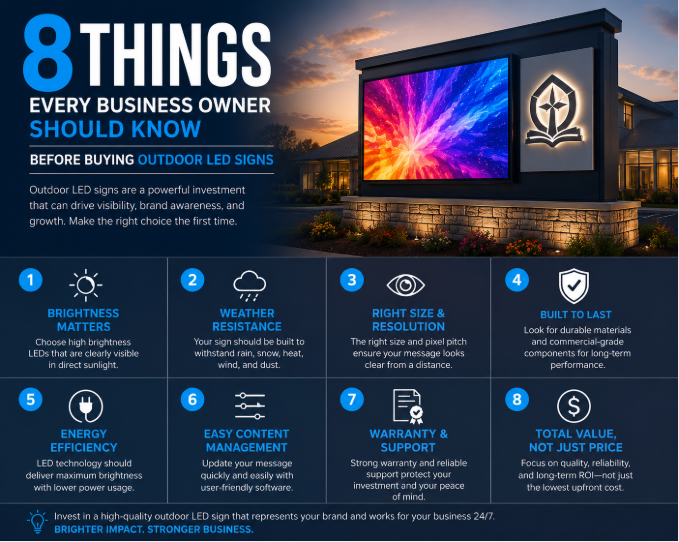
Outdoor LED signs are a significant investment. The decisions made during the specification and procurement process determine whether the installation delivers years of effective communication or creates an ongoing series of operational headaches. Here is what matters most.
1. Pixel Pitch Determines Viewing Distance, Not Just Resolution
Pixel pitch is the distance between individual LED clusters. A smaller pitch means higher resolution at close range. A larger pitch means better readability at greater distance. An outdoor LED sign installed at a 200-foot viewing distance does not need the same pixel pitch as one at 30 feet, and over-specifying resolution for the actual viewing distance adds cost without adding performance.
2. Brightness Varies by Environment, Not by Preference
A sign facing direct afternoon sunlight requires higher nit output than one in permanent shade. Specifying brightness without analyzing the ambient light environment produces a sign that is either washed out in direct sun or blindingly bright at night. Quality outdoor LED sign specifications include automatic brightness adjustment based on ambient light sensors.
3. Permits Are Mandatory, Not Optional
Most municipalities require permits for outdoor LED signs, with specific requirements for size, brightness, animation frequency, and setback from roadways. Non-compliant installations face removal orders, fines, and removal costs that can exceed the sign value. Confirm permit requirements before finalizing any specification.
According to the Outdoor Advertising Association of America, approximately 30 percent of LED sign installations at small and mid-size businesses encounter permit complications, with inadequate pre-installation research cited as the primary cause.
4. Content Management Software Determines Long-Term Usability
The hardware is only half the investment. A sign with difficult content management software will have outdated content because updating it is too cumbersome. Evaluate the content management platform before finalizing a vendor. Request a demonstration that includes scheduling, template creation, and emergency message override.
5. Warranty Coverage Varies Significantly Between Manufacturers
LED sign warranties range from two to ten years, with coverage that may exclude specific failure types, labor costs, or environmental damage. Read warranty terms carefully. A five-year parts warranty that excludes labor costs is worth significantly less than a five-year parts and labor warranty. Confirm that the warranty is backed by the manufacturer, not just the installer.
6. Energy Consumption Is a Long-Term Operating Cost
Modern outdoor LED signs are significantly more energy-efficient than earlier generations, but consumption still varies by size, brightness, and operating hours. Request power consumption specifications in watts and calculate annual energy cost before comparing bids. A lower-priced sign with higher energy consumption may cost more over five years than a higher-priced, more efficient model.
7. Viewing Angle Affects Off-Axis Readability
Not all drivers approach a sign directly from the front. A sign at an intersection may need to be readable from a 45-degree angle. Viewing angle specifications describe how far off-axis the sign remains readable at acceptable brightness. Confirm that the specified viewing angle matches the actual driver approach angles at your specific installation location.
8. Service Access Matters More Than It Appears at Purchase
LED panels eventually require service. Confirm that the installation design allows front or rear panel access without full dismount. Signs requiring complete removal for routine service create significant ongoing maintenance costs that were not visible at the time of purchase.
The International Sign Association reports that businesses with well-specified outdoor LED signs that are regularly updated with current messaging experience an average increase of 15 to 20 percent in customer awareness of promotions and current offerings compared to businesses with static exterior signage.
What to Do Now
Review your local permit requirements before contacting vendors. Prepare a specification that includes viewing distance, ambient light conditions, desired content update frequency, and energy budget. Vendors who respond to a specific brief provide more useful comparisons than those responding to an open inquiry.